
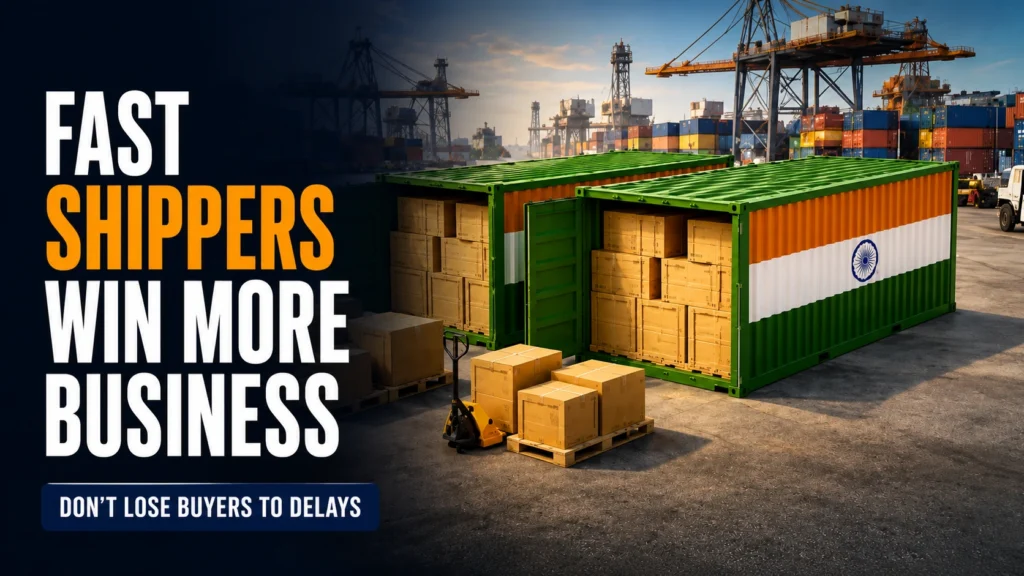
Buyers no longer wait simply because the product is cheaper.
You quoted the right price. The buyer approved your samples. Production finished on schedule. Yet three months later, the buyer shifted future orders to another supplier because your last shipment arrived 10 days late. In today’s textile export market, delivery performance often influences sourcing decisions as much as product quality and pricing.
According to the Ministry of Textiles, India’s textile and apparel exports exceeded $34 billion in FY 2023-24, while global retailers continued shortening sourcing and replenishment cycles. Global buyers expect faster replenishment, shorter lead times, and reliable shipment schedules. In both garment export and fabric sourcing, delayed deliveries can disrupt entire retail cycles. As textile exports from India continue to expand, exporters are discovering that logistics speed has become a competitive advantage that directly influences customer retention, repeat orders, and long-term growth.
Key Takeaways
- Product quality and pricing alone are no longer enough to win global textile contracts.
- Delivery speed has become a major factor in buyer retention and repeat orders.
- Export shipment delays can impact retail sales, inventory planning, and buyer profitability.
- Faster competitors often win business through reliability rather than lower pricing.
- Many shipping delays originate from preventable operational bottlenecks.
- Strategic logistics planning can improve customer satisfaction and export performance.
The Global Textile Market Has Changed
Fashion retailers today operate with significantly shorter lead times than they did a decade ago. Fast-fashion brands and e-commerce platforms now expect suppliers to replenish inventory quickly to keep pace with changing consumer demand.
Traditionally, apparel retailers planned inventory months. Long production and shipping timelines were considered normal. Today, consumer behavior has changed dramatically. Fashion trends emerge and disappear quickly, online shopping has accelerated purchasing cycles, and retailers are under constant pressure to respond to market demand.
According to industry reports, delayed inventory arrivals can significantly affect seasonal product sales, particularly in fashion categories where demand windows are often limited.
This shift affects every segment of the industry, from fabric manufacturers to finished garment exporters. Brands no longer want excessive inventory sitting in warehouses. Instead, they prefer leaner supply chains that allow them to replenish stock quickly and reduce working capital commitments.
This is particularly important in India’s apparel export markets, where international retailers compete aggressively to keep shelves stocked with current products.
For textile exporters, this means product quality and pricing remain important, but they are no longer the only factors influencing purchasing decisions.
A supplier that consistently delivers on time may be viewed as less risky than one offering slightly lower prices but with unpredictable delivery schedules.
In many cases, speed and reliability have become competitive differentiators in their own right.
Why Buyers Prioritize Shipping Speed?
Every delayed shipment creates a ripple effect throughout a buyer’s supply chain.
When cargo arrives late, retailers may miss seasonal selling opportunities. Fashion collections designed for a specific launch period can lose relevance if inventory arrives after customer demand peaks.
For international apparel buyers, timing is often directly linked to profitability.
Consider a retailer preparing for a summer clothing launch. If inventory arrives two weeks after the planned launch date, the retailer may miss peak seasonal demand and be forced to discount products earlier than expected, reducing overall profitability.
Late deliveries can also create challenges in:
- Production scheduling
- Inventory management
- Warehouse planning
- Retail distribution
- Marketing campaigns
Beyond operational disruption, delays create financial consequences. Buyers may face lost sales, increased storage costs, and pressure from their own customers.
This is why delivery reliability is increasingly considered alongside pricing and product quality during supplier evaluations.
From a buyer’s perspective, paying slightly more for a supplier who consistently delivers on time may be preferable to choosing a cheaper supplier with unpredictable shipment performance.
How Slow Shipping Causes Exporters to Lose Business?
Many exporters view delayed shipments as isolated incidents.
Buyers often view them as warning signs.
One delayed shipment may not immediately damage a relationship. However, repeated export shipment delays can gradually erode trust and confidence.
The consequences often include:
- Reduced repeat orders
- Smaller future order volumes
- Increased buyer scrutiny
- Lower supplier rankings
- Contract losses
When buyers experience recurring delivery problems, they begin searching for alternatives.
In competitive sourcing markets, suppliers are rarely evaluated in isolation. Buyers continuously compare vendors based on overall performance, including responsiveness, reliability, communication, and delivery consistency.
A supplier may offer excellent products and competitive pricing but still lose business if shipments repeatedly miss delivery windows.
Over time, reputation becomes a critical factor. In fact, buyers remember suppliers who help them meet deadlines. They also remember suppliers who create operational challenges.
The impact extends beyond individual orders. Poor delivery performance can influence future sourcing decisions and reduce opportunities for long-term partnerships.
The Competitors Winning These Contracts Are Not Always Cheaper
A common assumption among exporters is that competitors win business because they offer lower prices.
In reality, many successful exporters compete through execution rather than pricing.
Buyers increasingly reward suppliers who can provide:
- Reliable delivery schedules
- Better shipment visibility
- Faster response times
- Consistent communication
- Strong logistics planning
These advantages help reduce supply chain uncertainty.
For buyers managing large volumes of inventory, predictability is often more valuable than marginal cost savings.
A supplier capable of delivering products on schedule enables better planning throughout the supply chain. This reduces operational risk and improves inventory availability.
As a result, exporters who invest in logistics efficiency often gain a competitive edge.
The winning strategy is not always producing goods more cheaply. Sometimes it is delivering them more effectively.
This shift is changing how buyers evaluate textile suppliers across global sourcing markets.
Where Indian Textile Exporters Typically Lose Time
Export delays usually begin inside a company’s own operations long before cargo reaches a port.
The problem often begins with operational bottlenecks that accumulate throughout the export process.
Common causes include:
Production Delays
Manufacturing schedules can slip due to raw material shortages, workforce constraints, or unexpected demand fluctuations.
Documentation Issues
Late or inaccurate documentation frequently delays cargo movement and booking processes.
Freight Booking Challenges
Capacity shortages and late booking requests can limit transportation options and create shipment delays.
Customs Coordination
Incomplete documentation or filing errors can slow cargo processing and disrupt planned schedules.
Port Congestion
High cargo volumes and operational disruptions occasionally affect vessel schedules and cargo movement.
These issues rarely occur in isolation. Often, multiple small delays combine to create significant delivery disruptions.
Rather than blaming any single stakeholder, exporters should focus on identifying where time is lost within their own operations.
A proactive approach to planning often produces substantial improvements in delivery performance.
Air Freight vs Ocean Freight: Making the Right Decision
Transportation mode selection can significantly affect delivery timelines.
Ocean freight remains the preferred option for most textile shipments due to its cost efficiency. It is particularly suitable for large-volume exports where transit time is less critical.
However, there are situations where faster transportation becomes strategically important.
For example:
- Urgent replenishment orders
- Seasonal fashion launches
- High-value garments
- Customer recovery situations
- Time-sensitive promotions
In these cases, faster transportation may help preserve customer relationships and avoid lost sales.
This does not mean every shipment should move by air.
Instead, exporters should evaluate transportation choices based on product value, customer expectations, and business objectives.
Effective garment export logistics requires balancing transportation cost against commercial risk.
A delayed shipment can sometimes cost far more than the additional expense of expedited transportation.
The most successful exporters evaluate freight decisions strategically rather than treating shipping purely as a cost-management exercise.
| Scenario | Recommended Mode |
| Seasonal Fashion Launch | Air Freight |
| Urgent Replenishment Order | Air Freight |
| High-Value Garments | Air Freight |
| Bulk Fabric Exports | Ocean Freight |
| Cost-Sensitive Shipments | Ocean Freight |
What Leading Garment Exporters Do Differently?
Leading garment exporters often share several operational practices that help them maintain delivery reliability and strengthen buyer relationships.
While products and markets vary, successful exporters often excel in planning and execution.
Common characteristics include:
Forecast-Based Planning
Successful exporters forecast demand early and begin freight planning before production is completed. This allows them to secure transportation capacity, reduce booking delays, and maintain better control over lead times.
Early Documentation Preparation
Required paperwork is prepared and reviewed early to avoid last-minute issues.
Shipment Visibility
They use shipment tracking tools and work closely with freight forwarders to monitor cargo movement. This improves supply chain visibility and helps teams respond quickly when disruptions occur.
Contingency Planning
Backup transportation options and alternative routing strategies help reduce risk.
Strong Coordination
Production, logistics, sales, and customer service teams work together rather than operating independently.
These practices improve reliability and reduce the likelihood of shipment delays.
The result is a stronger reputation among buyers and greater confidence in delivery commitments.
How Faster Shipping Strengthens Export Profitability?
Many exporters view logistics primarily as a cost center.
However, delivery performance can directly influence revenue growth.
Faster and more reliable shipping often leads to:
Repeat Orders
Satisfied buyers are more likely to continue sourcing from suppliers they trust.
Better Buyer Retention
Reliable performance strengthens long-term customer relationships.
Larger Contracts
Buyers frequently allocate greater volumes to suppliers with proven delivery capabilities.
Improved Cash Flow
Faster deliveries can accelerate invoicing and payment cycles.
Premium Business Opportunities
Some buyers are willing to pay more for suppliers who consistently meet demanding timelines.
These benefits demonstrate why logistics should be viewed as part of a broader growth strategy.
Shipping performance affects customer satisfaction, reputation, and competitive positioning.
In today’s export environment, supply chain execution is often just as important as manufacturing capability.
Conclusion
Global buyers increasingly expect suppliers to deliver not only quality products but also reliable timelines. In many cases, the difference between winning and losing future orders comes down to supply chain performance.
For modern textile exporters, faster shipping is no longer just an operational metric. It is a competitive advantage that influences customer retention, profitability, and long-term growth. Looking to reduce shipment delays and improve delivery reliability? Our export logistics specialists can evaluate your current shipping process, identify operational bottlenecks, and recommend strategies to help you meet buyer timelines more consistently.
Frequently Asked Questions
Faster shipping helps buyers maintain inventory availability, meet retail launch deadlines, and respond quickly to changing customer demand. Reliable delivery also reduces supply chain disruptions, improves inventory planning, and strengthens buyer confidence in the supplier’s ability to meet future commitments.
It depends on shipment urgency, product value, buyer expectations, and overall economics. Both air and ocean freight serve important roles within export supply chains.
It depends on shipment urgency, product value, buyer expectations, and overall economics. Both air and ocean freight serve important roles within export supply chains.
Common causes include production bottlenecks, documentation issues, freight capacity constraints, customs requirements, and port congestion.
Better planning, early documentation preparation, stronger shipment visibility, and proactive logistics coordination can significantly reduce delays.