wp.clearfast

Cover image titled "Fast Shippers Win More Business" featuring export containers, packaged goods, and a container terminal.

Why Are Indian Textile Exporters Losing Deals to Competitors Who Ship Faster?

Buyers no longer wait simply because the product is cheaper. You quoted the right price. The buyer approved your samples. Production finished on schedule. Yet three months later, the buyer shifted future orders to another supplier because your last shipment arrived 10 days late. In today’s textile export market, delivery performance often influences sourcing decisions […]

Why Are Indian Textile Exporters Losing Deals to Competitors Who Ship Faster? Read More »

Cover image titled "Customs Examination at JNPT" featuring a container vessel docked at Jawaharlal Nehru Port with container cranes.

Customs Examination at JNPT: What to Expect and What to Keep Ready

Your shipment has been selected for examination. Now what? As India’s largest container port, JNPT handles millions of tonnes of cargo annually, making customs examinations a routine part of import clearance operations. While most shipments clear without major issues, preparation remains critical to avoiding unnecessary delays and costs. For many importers, receiving a notification about

Customs Examination at JNPT: What to Expect and What to Keep Ready Read More »

Cover image titled "Door-to-Door vs Port-to-Port Freight" featuring a container ship transporting cargo across the ocean.

Door-to-Door vs Port-to-Port Freight: Which One Is Right for Your Business?

The cheaper freight quote is not always the cheaper shipment. An importer receives two quotations for the same cargo. One offers door-to-door freight shipping at a higher price, while the other provides a lower-cost alternative through port-to-port transportation. At first glance, the cheaper option appears to be the obvious choice. However, once local transportation, customs

Door-to-Door vs Port-to-Port Freight: Which One Is Right for Your Business? Read More »

Cover image titled "Air Freight vs Ocean Freight for Pharmaceuticals" featuring a cargo aircraft above a container port and cargo ship.

Air Freight vs Ocean Freight for Pharmaceuticals: What Indian Exporters Must Know

In the fast-moving world of pharmaceutical exports, every shipping decision can have a direct impact on product quality, regulatory compliance, and customer trust. For Indian exporters, choosing between air freight vs sea freight is not simply a logistics decision; it is a strategic choice that affects delivery timelines, inventory planning, cold chain integrity, and overall

Air Freight vs Ocean Freight for Pharmaceuticals: What Indian Exporters Must Know Read More »

Cover image titled "Understand 100% EOU in Simple Terms" featuring a container ship carrying cargo at sea.

What is a 100% EOU? A Plain-English Guide for Indian Manufacturers

Many manufacturers exploring export opportunities eventually come across the term 100% EOU. They often hear about businesses benefiting from customs-related advantages, easier access to imported inputs, and incentives designed to support export growth. Naturally, this raises important questions such as – what exactly is a 100% Export Oriented Unit? Who can apply for it? And

What is a 100% EOU? A Plain-English Guide for Indian Manufacturers Read More »

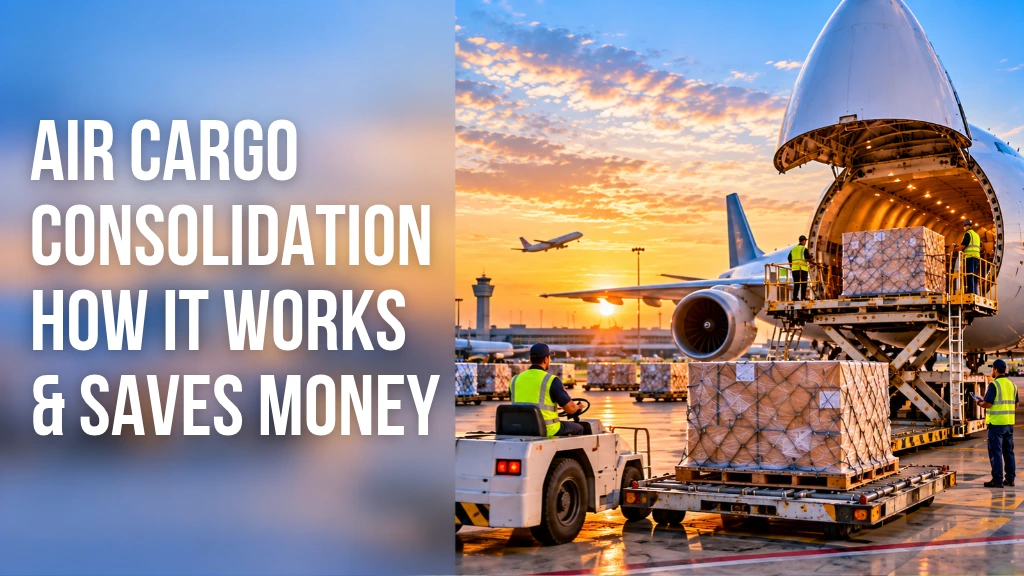
Cover image titled "Air Cargo Myths – Avoid Costly Shipping Mistakes" featuring a cargo aircraft and palletized freight on an airport tarmac.

5 Air Cargo Myths Costing Indian SMEs Money

The most expensive logistics decisions are often based on outdated assumptions. Imagine an SME importing inventory ahead of a seasonal sales period. To reduce transportation expenses, the company chooses sea freight over air cargo for India-related options. The shipment takes longer than expected, stock runs out, customers turn elsewhere, and revenue opportunities disappear. What initially appeared

5 Air Cargo Myths Costing Indian SMEs Money Read More »

Cover image titled "EPCG Scheme Explained – Don't Overpay Customs Duty" featuring industrial machinery and a manufacturing facility.

The EPCG Scheme Explained: Why Most Indian Machinery Importers Overpay on Customs Duty

Importing machinery is often one of the largest investments a manufacturing business makes. Companies carefully budget for equipment costs, freight charges, insurance, and GST, only to discover that customs duty has added a significant amount to the final project cost. Key Takeaways Understanding the EPCG licence process before machinery is imported can help businesses reduce

The EPCG Scheme Explained: Why Most Indian Machinery Importers Overpay on Customs Duty Read More »

Container ship approaching a busy port with cranes and cargo terminals, illustrating customs clearance procedures.

What Happens to Your Shipment at Customs? A Step-by-Step Walkthrough

For many importers and exporters, customs clearance feels like a black box. A shipment is submitted, documents are reviewed, inspections may take place, and eventually the cargo is either cleared or held for further checks.  Understanding what actually happens during this process can help businesses avoid delays, reduce compliance risks, and plan shipments more efficiently.

What Happens to Your Shipment at Customs? A Step-by-Step Walkthrough Read More »

Cargo ship carrying stacked containers, illustrating import-export documentation and shipping processes.

Bill of Entry vs Bill of Lading: The Difference That Trips Up Every First-Time Importer

A shipment can travel thousands of miles without a problem, yet a simple document mix-up can leave it stuck at customs. This is exactly why understanding the difference between a Bill of Entry and a Bill of Lading is so important for importers. Although both documents are linked to the same shipment, they serve very

Bill of Entry vs Bill of Lading: The Difference That Trips Up Every First-Time Importer Read More »

Container yard with stacked shipping containers and lifting equipment illustrating landed cost calculation for imported goods.

How to Calculate Landed Cost for Imported Goods in India (With Formula)

A shipment quoted at ₹10 lakh can easily end up costing ₹14 lakh or more by the time it reaches your warehouse. Yet many importers make sourcing decisions based only on the supplier’s invoice value, overlooking expenses that arise throughout the import process. Freight charges, customs duties, insurance costs, port fees, and IGST on imports

How to Calculate Landed Cost for Imported Goods in India (With Formula) Read More »

Scroll to Top