

Your freight quote may cover the main transportation cost, but what happens when customs clearance takes longer than expected, a container cannot be collected on time or a warehouse is not ready to unload it? These delays can generate additional invoices that increase your total shipping expenditure.
Demurrage and detention charges generally apply when a container exceeds the agreed free-time allowance, while storage charges relate to the use of port, terminal or depot space. Understanding how these charges differ, when they begin and what your shipping agreement requires helps you identify cost risks before they affect your freight budget.
Key Takeaways:
- Demurrage generally applies to containers held inside a terminal beyond free time.
- Detention generally applies to carrier containers held outside the terminal beyond free time.
- Storage charges cover the use of terminal or depot space under applicable terms.
- Free time and charging rates vary by carrier, location and booking conditions.
- Early document checks and coordinated collection and return plans help reduce avoidable costs.
What Are Demurrage, Detention and Storage Charges?
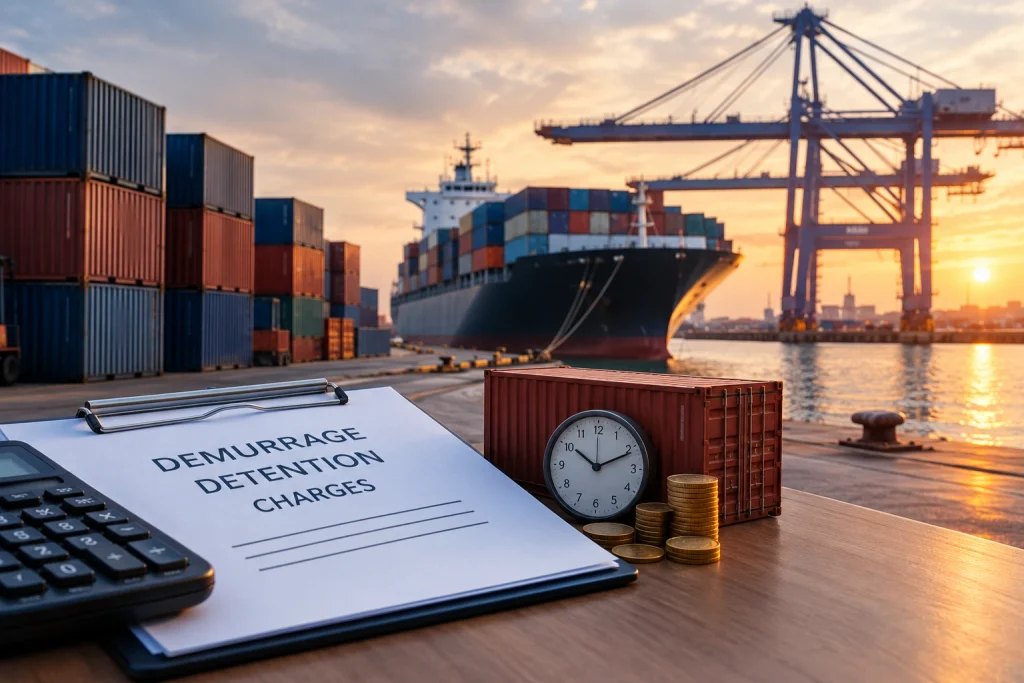
Demurrage, detention and storage charges are additional costs that may arise when cargo or containers remain in a port, terminal, depot or consignee’s custody beyond the applicable allowance. Although these charges can arise during the same shipment, they do not necessarily cover the same service or period.
What Are Demurrage Charges?
Demurrage charges generally apply when a carrier’s container remains inside the port, terminal or depot beyond the agreed free-time allowance.
For example, an imported container may arrive at a terminal but remain there because customs clearance is incomplete or the importer has not arranged a collection. If the applicable free time expires, demurrage may become payable under the carrier’s terms.
Understanding what happens to your shipment during customs clearance can help importers identify potential release delays and plan container collection more effectively. ClearFast’s Customs Brokerage service can also be linked here to help readers explore customs-related support.
The start date and calculation method depend on the specific booking. Some carrier arrangements calculate import demurrage from the container’s discharge date, so you should confirm the applicable tariff rather than assume the clock starts when the container becomes available for collection.
What Are Detention Charges?
Detention charges generally apply when a carrier’s container remains outside the port or terminal beyond the permitted free time.
An importer may collect a loaded container but experience delays unloading it at the warehouse. If the empty container is not returned within the permitted period, detention may apply.
The key operational requirement is to plan the empty return before arranging collection. Confirm the unloading slot, return depot, opening hours and any appointment requirements so that the return can take place within the applicable allowance.
What Are Storage Charges?
Storage charges relate to the use of port, terminal or depot space beyond the applicable free period.
They may be billed separately from demurrage, depending on the carrier’s arrangements and local tariff. Therefore, do not assume that one invoice automatically covers every charge associated with a delayed container.
For example, Jawaharlal Nehru Port Authority (JNPA) publishes tariff information, including storage-related provisions. Check the current tariff for the relevant facility rather than applying a generic rate to every shipment.
What Is the Difference Between Demurrage and Detention?
The main difference between demurrage and detention is where the carrier’s container is held and which contractual charging period applies.
| Charge | Typical situation | What to check |
| Demurrage | Container remains inside the terminal beyond free time | Discharge date, free time and carrier tariff |
| Detention | Container remains outside the terminal beyond free time | Collection date, return deadline and carrier tariff |
| Storage | Cargo or container occupies terminal or depot space beyond the applicable allowance | Facility tariff, storage period and free-time conditions |
These are general distinctions. A carrier may use combined demurrage and detention arrangements, and local billing practices may differ.
Can Demurrage and Storage Apply to the Same Shipment?
Yes. Depending on the applicable terms, a delayed container may attract carrier demurrage and separately invoiced terminal storage charges.
Suppose an importer cannot collect a container because a customs query remains unresolved. The carrier may charge demurrage under its contract, while the terminal may apply its own storage tariff.
Before paying, compare the invoices, charging periods and contractual basis. Ask the relevant provider to explain how each charge was calculated and whether any adjustment or waiver provision applies.
How Does Free Time in Shipping Affect These Charges?
Free time in shipping is the agreed period during which the relevant demurrage, detention or storage charge does not apply. The allowance depends on the booking, carrier, route, equipment and applicable terms.
Maersk’s free-time guidance explains that free time is agreed between the carrier and merchant. Its applicable India import tariff should be checked to confirm the charging basis and relevant demurrage and detention terms.
When Does the Free-Time Clock Start and Stop?
The start and end points depend on the particular charge and contract. For example, a carrier may calculate import demurrage from the container discharge date, whereas detention may be calculated according to the collection and empty-return conditions or a combined charging arrangement.
Before the shipment arrives, confirm:
- The event that starts free time.
- The number of permitted days.
- Whether calendar days or another basis applies.
- The last free day.
- The event that stops the charge.
- The applicable rate after free time expires.
Do not automatically exclude weekends or public holidays. Some tariffs count these days, and the treatment must be verified against the applicable terms.
Practical recommendation: Record the confirmed last free day in your shipment tracker and assign someone to monitor it. This creates a clear deadline for customs, transport and warehouse coordination.
Why Do Demurrage Charges in India Occur?
Demurrage charges in India commonly arise when an import container remains at the terminal beyond the carrier’s permitted free time. The cause may be a documentation issue, delayed release, transport constraint or a missed collection arrangement. Reviewing common customs clearance mistakes that delay shipments can help importers identify avoidable issues before their free-time allowance expires.
1. Can Incomplete Customs Documents Cause Demurrage?
Yes. Missing or inconsistent documentation can delay customs processing, leaving the container at the terminal while the free-time allowance continues to run under the applicable terms.
The invoice, packing list and supporting documents should be checked before arrival wherever possible. Knowing the difference between a Bill of Entry and Bill of Lading can help importers prepare the relevant paperwork and coordinate customs processing. Importers can also explore ClearFast’s Customs Brokerage service for support with applicable clearance requirements. If Customs requests clarification, the importer and broker should know who will provide the required information and how quickly the response can be coordinated.
2. Can Transport Delays Increase Container Charges?
Yes. A container may be ready for collection, but the truck or delivery slot may not be available. If collection takes place after free time expires, demurrage may apply.
Confirm transport availability before the container becomes ready for collection. Coordinate the vehicle booking with the expected release, terminal procedures and warehouse receiving window.
Comparing door-to-door and port-to-port freight arrangements can help importers understand which transport stages need to be coordinated after a container is released.
ClearFast’s Freight Forwarding service is also relevant when coordinating shipment movement and delivery arrangements.
3. Can Warehouse Constraints Cause Detention?
Yes. If the receiving facility cannot unload the container as planned, the empty return may be delayed. Detention can then arise if the applicable return deadline is exceeded.
Confirm warehouse capacity, labour availability and unloading arrangements before dispatching the container. The empty-return plan should be agreed at the same time as the collection plan. If additional storage is required, explore ClearFast’s Warehousing service to discuss your storage requirements.
How Can You Reduce Detention Charges in India?
You can reduce avoidable detention exposure by planning the container’s collection, unloading and empty return as one connected process.
First, confirm the free-time allowance and empty-return instructions with the carrier. Next, coordinate the delivery appointment with the warehouse and ensure that the facility can unload the container when it arrives.
Before the loaded container leaves the terminal, confirm the nominated empty-return depot, operating hours and appointment requirements. If the delivery schedule changes, notify the relevant parties early and ask what options are available.
These steps cannot eliminate every delay, but they help your team identify problems before they extend the container’s time outside the terminal.
How Can You Identify Storage Charges at Port Before They Affect Your Budget?
You can identify potential port storage costs by checking the relevant terminal tariff, free-time allowance and expected collection date before the container arrives.
Calculating the total landed cost of imported goods also helps businesses assess how additional shipping and port charges affect the overall cost of an import.
Do not assume that the shipping line’s free time and the terminal’s storage allowance are identical. They may be governed by different terms and invoiced by different parties.
Importers moving cargo through JNPA should consult the authority’s official tariff information and any relevant circulars rather than rely on rates from an older shipment.
When reviewing a storage invoice, check the facility, container reference, dates, applicable tariff and calculation. If the amount appears incorrect, request a breakdown and compare it with the relevant terms and transaction records.
How Can You Estimate Demurrage and Detention Charges Before Booking?
You can estimate potential exposure by confirming the free-time allowance, charging basis and applicable tariff for your actual shipment.
Use this checklist before approving the booking:
| Information to confirm | Why it matters |
| Free-time allowance | Establishes the permitted period |
| Start date and last free day | Identifies the deadline |
| Equipment type | Different equipment may have different rates |
| Carrier tariff | Establishes the applicable charging basis |
| Terminal storage tariff | Identifies potentially separate costs |
| Empty-return requirements | Helps prevent post-collection delays |
| Extension options | Clarifies whether additional free time can be purchased |
Avoid using a universal daily rate. Carrier tariffs can vary by equipment, route, booking conditions and charging period.
For budgeting, ask your freight forwarder to identify potential demurrage, detention and storage exposure separately. This gives you a clearer view of costs that may arise if the planned shipment timeline changes.
What Should You Ask Your Freight Forwarder Before Booking?
Before confirming a shipment, ask your freight forwarder to clarify the free-time allowance, tariff and responsibilities for each stage of the container movement. Understanding Incoterms 2020 and shipping responsibilities can help buyers and sellers clarify their respective obligations for transport, costs and delivery.
Useful questions include:
- How many free days apply to this booking?
- When does each charging period begin?
- Are demurrage and detention calculated separately or together?
- Can terminal storage be billed separately?
- What rates apply after free time expires?
- Who monitors customs release and container collection?
- Who confirms the empty-return location?
- Is an extension available, and what conditions apply?
The answers should relate to the actual carrier, equipment, port and booking terms. A general statement that free time is included does not tell you how much time is available or what happens after it expires.
How Can Better Shipment Coordination Reduce Hidden Freight Costs?
Better shipment coordination helps reduce avoidable costs by aligning documentation, customs release, transport, warehouse receiving and empty-container return.
The most useful approach is to assign responsibility for each handover and track the shipment against confirmed deadlines. If documentation is incomplete, the responsible person should know what is missing. If a truck is unavailable, the team should understand how that affects collection and the remaining free time.
For importers and exporters using gateways such as Mumbai/JNPA or Mundra, the relevant carrier and terminal arrangements should be checked for each shipment. The same charging assumptions should not be copied across ports without verification.
Conclusion
You can manage demurrage, detention and storage exposure more effectively by understanding the difference between the charges, confirming free time before arrival and coordinating customs, collection, unloading and empty return.
The most important step is to work from the actual carrier and terminal terms rather than assuming that every port, container or booking follows the same rules. Track the last free day, assign responsibility for each handover and review invoices against the applicable tariffs.
Planning an import or export shipment? Review your free-time allowance, terminal charges and collection arrangements before confirming the booking. Explore our Freight Forwarding service and Customs Brokerage service for logistics support.
Frequently Asked Questions
1. What is the difference between demurrage and detention charges?
Demurrage generally applies when a carrier’s container remains inside a terminal beyond free time, while detention generally applies when it remains outside beyond the permitted period. Exact definitions, calculation methods and charging arrangements depend on the carrier’s contract and the location.
2. How can I avoid demurrage charges in India?
Prepare customs documents before arrival, monitor the last free day, coordinate cargo release and arrange transport early. Confirm the applicable terminal and carrier terms, since customs delays, unavailable vehicles or missed collection arrangements can extend the time a container remains at the port.
3. Are port storage charges the same as demurrage?
No. Port storage charges relate to the use of terminal or depot space, while demurrage generally relates to a carrier’s container remaining inside the terminal beyond free time. Depending on local arrangements, these charges may be billed separately, so check the relevant tariff and invoice.
4. Does free time in shipping include weekends and public holidays?
It depends on the applicable carrier and terminal terms. Some arrangements count calendar days, including weekends and holidays. Confirm the free-time calculation basis, start date and last free day for your specific booking instead of assuming non-working days are excluded.