
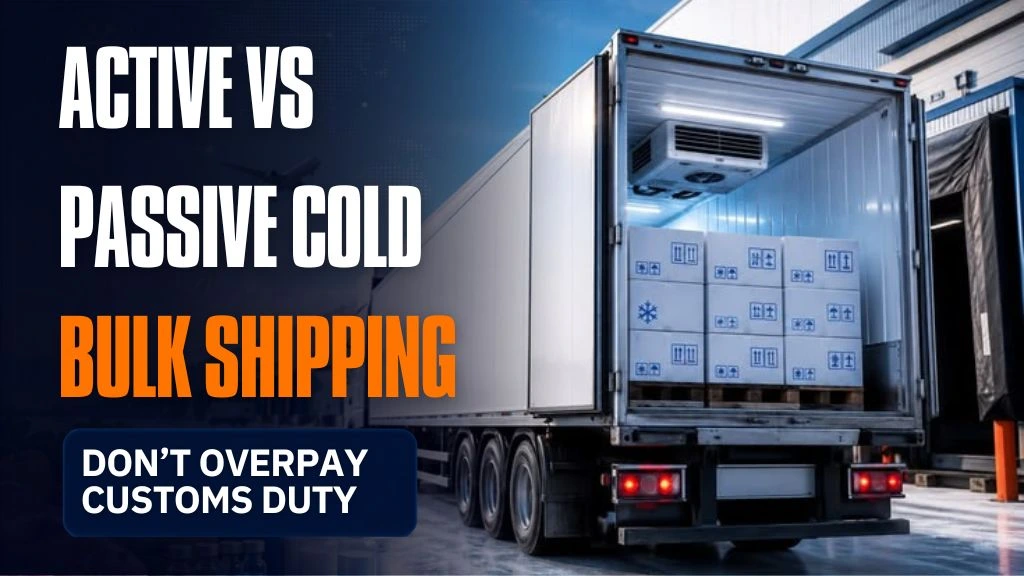
Pharmaceutical products don’t get a second chance if temperature control fails. Whether you’re shipping vaccines, biologics, clinical trial materials, insulin, or specialty medicines, even a brief temperature excursion can compromise product quality, delay deliveries, and create regulatory issues.
That is why choosing between active vs passive cold chain packaging is one of the most important decisions in pharmaceutical logistics. The right packaging solution protects product integrity while balancing transit time, shipping costs, regulatory compliance, and operational efficiency.
This guide explains the differences between the two major cold chain packaging types, when each solution works best, and how businesses can choose the most reliable temperature-controlled pharma packaging for domestic and international shipments.
Need reliable pharmaceutical transportation? Explore our Temperature Controlled Logistics solutions to maintain product integrity from origin to destination.
Why Cold Chain Packaging Matters in Pharmaceutical Logistics
Cold chain packaging is more than insulated boxes or refrigerated containers. It is a validated system designed to keep pharmaceutical products within their approved temperature range throughout transportation.
Many medicines require storage between 2°C and 8°C, while others may require frozen or ultra-low temperatures. Exposure to heat, freezing, humidity, or prolonged transit times can reduce efficacy or render products unusable.
Effective packaging helps:
- Maintain validated temperature ranges
- Reduce spoilage and product loss
- Support GDP compliance
- Minimise shipment delays caused by temperature excursions
- Improve confidence during customs clearance and international transport
Selecting the right packaging solution begins with understanding the two primary cold chain packaging types used across the pharmaceutical industry.
Understanding Active Cold Chain Packaging
Active cold chain packaging uses powered equipment to actively maintain a controlled internal temperature throughout the shipment.
These systems rely on external power sources, rechargeable batteries, compressors, or refrigeration technology instead of passive insulation alone.
Examples include:
- Refrigerated air cargo containers
- Battery-powered temperature-controlled containers
- Electrically cooled shipping units
- Active refrigerated pallet systems
Rather than simply slowing temperature change, active packaging continuously regulates internal conditions regardless of changes in the surrounding environment.
Advantages of Active Packaging
- Highly accurate temperature control: Powered refrigeration maintains a narrow temperature range throughout long journeys.
- Suitable for extended transit: Long international shipments involving multiple transfers benefit from continuous temperature regulation.
- Reduced risk during delays: Unexpected customs inspections, airport congestion, or weather disruptions have less impact on shipment temperature.
- Continuous monitoring: Many active systems include GPS tracking, remote monitoring, alarms, and real-time temperature reporting.
- Ideal for sensitive pharmaceutical products: Products with strict temperature requirements benefit from consistent environmental control.
Planning international pharmaceutical shipments? Our Pharma Logistics services help ensure compliant transportation for temperature-sensitive products.
What Is Passive Cold Chain Packaging?
Passive cold chain packaging maintains temperature using insulated materials combined with refrigerants such as gel packs, phase change materials (PCMs), or dry ice.
Unlike active systems, passive packaging contains no powered cooling mechanism. Instead, it preserves internal temperatures for a validated duration.
Common passive packaging solutions include:
- Insulated shipping boxes
- Thermal pallet covers
- Vacuum-insulated panels
- Expanded polystyrene (EPS) containers
- Phase change packaging systems
These systems are widely used because they are simple, lightweight, and cost-effective.
Benefits of Passive Packaging
- Lower shipping costs: Passive systems generally cost less than active refrigerated containers.
- Easy handling: No electrical connection or charging is required during transportation.
- Lightweight design: Lower package weight can reduce air freight costs.
- Suitable for shorter transit times: Validated passive packaging performs well when transit durations remain within tested limits.
- Flexible shipping: Passive packaging can move through standard courier and cargo networks without specialised handling equipment.
Learn how proper packaging supports compliance by reading our blog on GDP Compliance for Pharma Exports.
Active vs Passive Cold Chain Packaging: Key Differences
Choosing between active vs passive cold chain packaging depends on product sensitivity, transit duration, shipping method, and budget.
| Feature | Active Packaging | Passive Packaging |
| Cooling method | Powered refrigeration | Insulation with refrigerants |
| Temperature control | Continuous regulation | Maintains temperature for a validated period |
| Transit duration | Long-distance shipments | Short to medium-duration shipments |
| Cost | Higher | Lower |
| Monitoring | Advanced real-time monitoring | Usually data loggers only |
| Risk during delays | Lower | Higher if validation period is exceeded |
| Weight | Heavier | Generally lighter |
| Maintenance | Requires servicing and charging | Minimal maintenance |
Neither solution is universally better. The right choice depends on shipment requirements.
When Should You Choose Active Cold Chain Packaging?
Active packaging is recommended when shipment conditions involve greater uncertainty or higher product value.
Consider active systems for:
- Long international shipments: Extended air or multimodal transport increases the risk of temperature excursions.
- High-value biologics: Expensive pharmaceutical products justify the additional investment in active cooling.
- Clinical trial materials: Small shipment volumes with significant research value require maximum protection.
- Multiple customs checkpoints: Long border clearance processes can extend transit times unexpectedly.
- Extreme weather conditions: Shipments travelling through very hot or very cold climates benefit from active temperature regulation.
If your shipment involves international air transport, our Air Freight solutions provide reliable handling for temperature-sensitive pharmaceutical cargo.
When Passive Packaging Is the Better Choice
Passive systems remain the preferred option for many pharmaceutical companies.
They work well when:
- Transit times are predictable
- Delivery occurs within validated packaging duration
- Distribution is regional or domestic
- Shipping budgets are limited
- Products tolerate short external temperature variations
Passive packaging has become increasingly sophisticated, with advanced phase change materials capable of maintaining temperature for several days under validated conditions.
Factors to Consider Before Choosing Temperature-Controlled Pharma Packaging
Selecting the right temperature-controlled pharma packaging requires evaluating several operational factors.
- Product stability: Review the manufacturer’s approved storage temperature and acceptable excursion limits. Highly temperature-sensitive medicines often require active systems.
- Shipping duration: Longer transit times increase uncertainty. Consider not only planned transit but also potential delays.
- Climate conditions: Routes crossing tropical regions, deserts, or harsh winters place additional stress on packaging.
- Transportation mode: Road, air, sea, and multimodal transport all present different temperature challenges.
- Regulatory compliance: GDP guidelines require documented evidence that packaging maintains required temperatures throughout transportation.
- Budget: Although active packaging costs more initially, preventing product loss often offsets higher transportation expenses.
How Validation Supports Cold Chain Packaging Performance
Whether using active or passive packaging, validation remains essential.
Validation demonstrates that packaging consistently maintains required temperatures under expected shipping conditions.
Validation may include:
- Thermal performance testing
- Seasonal qualification
- Lane validation
- Packaging performance reports
- Data logger analysis
- Distribution simulations
Without validated packaging, pharmaceutical companies risk product rejection and regulatory non-compliance.
For additional guidance, read our article on Cold Chain Logistics Best Practices.
The Role of Monitoring in Cold Chain Shipments
Packaging alone cannot guarantee product safety.
Modern pharmaceutical shipments increasingly rely on monitoring technologies, including:
- Temperature data loggers
- GPS shipment tracking
- Humidity sensors
- Shock indicators
- Real-time monitoring platforms
These technologies provide visibility throughout transportation and enable faster responses if temperatures move outside acceptable ranges.
Managing Customs Delays Without Compromising Temperature
International pharmaceutical shipments frequently encounter customs inspections that extend transit times.
This makes packaging selection even more important.
Active systems offer greater protection during prolonged delays because refrigeration continues operating throughout transit.
Passive packaging requires sufficient validated hold time to accommodate unexpected waiting periods.
Businesses shipping internationally should also understand common customs-related risks before dispatching pharmaceutical products. Our guide on Pharma Cold Chain Risk at Customs explains practical strategies for reducing temperature-related disruptions.
Air Freight and Cold Chain Packaging
Air transport remains the preferred option for many pharmaceutical products because of shorter transit times.
However, airport handling, aircraft loading, and tarmac exposure still create temperature risks.
Selecting the right packaging for air freight depends on:
- Flight duration
- Airport infrastructure
- Ambient temperatures
- Transfer points
- Product sensitivity
Combining validated packaging with experienced logistics providers helps maintain product quality throughout the journey.
You can also explore our article on Air Freight for Pharmaceuticals to understand how air cargo supports time-sensitive medical shipments.
Common Mistakes to Avoid
Choosing packaging based solely on cost can create significant risks.
Avoid these common mistakes:
- Selecting passive packaging without validating transit duration
- Ignoring seasonal temperature changes
- Failing to monitor shipment temperatures
- Using packaging not designed for pharmaceutical transport
- Underestimating customs or airport delays
- Skipping GDP documentation requirements
Careful planning helps prevent costly product losses and protects patient safety.
Need expert guidance for pharmaceutical shipping? Speak with our specialists to choose the right packaging and logistics solution for your shipment requirements.
Conclusion
Choosing between active vs passive cold chain packaging depends on far more than shipping cost. Product sensitivity, transit time, environmental conditions, regulatory requirements, and transportation mode all influence the right decision.
Active systems provide continuous temperature control and are ideal for high-value pharmaceuticals, international shipments, and unpredictable transit conditions. Passive systems offer a cost-effective, validated solution for shorter and more predictable deliveries.
By evaluating shipment risks, validating packaging performance, and partnering with experienced logistics providers, pharmaceutical companies can protect product quality while maintaining compliance throughout the supply chain.
If you’re evaluating an upcoming import, speak to our import specialists to better understand the true cost of bringing goods into India and build a more informed import strategy.
Frequently Asked Questions
Active packaging uses powered refrigeration to maintain temperature throughout transit, while passive packaging relies on insulated materials and refrigerants such as gel packs or phase change materials to keep products within a validated temperature range.
Neither option is universally better. Active packaging is ideal for long-distance or highly sensitive pharmaceutical shipments, whereas passive packaging is suitable for shorter, validated transportation routes with predictable transit times.
High-value biologics, vaccines, clinical trial materials, cell and gene therapies, and pharmaceuticals with strict temperature requirements commonly use active cold chain packaging
The duration depends on the packaging design, insulation quality, refrigerant type, and environmental conditions. Validated passive systems may maintain required temperatures from several hours to multiple days.
Validation demonstrates that the packaging consistently maintains the required temperature under expected transport conditions. It supports GDP compliance, reduces the risk of temperature excursions, and helps protect pharmaceutical product quality during shipping.