
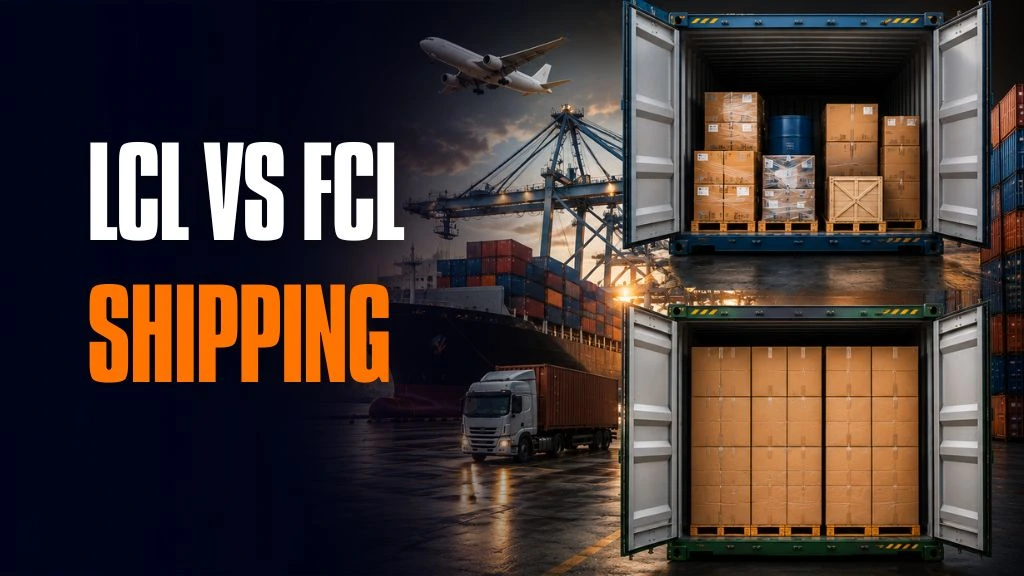
If you’re shipping goods internationally, choosing between Less than Container Load (LCL) and Full Container Load (FCL) can have a significant impact on your shipping costs, transit times, and supply chain efficiency. Selecting the wrong option may leave you paying for unused container space or facing unnecessary delays because your cargo needs to be consolidated with other shipments.
Understanding LCL vs FCL shipping helps you make informed decisions based on your cargo volume, delivery schedule, and budget. Whether you’re moving small commercial shipments or managing regular international imports and exports, knowing when to use each shipping method can improve efficiency while keeping logistics costs under control.
In this guide, we’ll compare LCL and FCL shipping, explain how cargo consolidation works, and outline the factors to consider before choosing the most suitable Sea Freight solution for your business.
Key Takeaways
- The most cost-effective shipping option isn’t always the cheapest one.
- Matching container type to cargo volume improves logistics efficiency.
- Transit time is influenced by handling and consolidation, not just distance.
- Total landed cost gives a clearer picture than freight rates alone.
- A well-planned shipping strategy balances cost, speed, and cargo requirements.
What Is the Difference Between LCL and FCL Shipping?
The primary difference between LCL and FCL shipping is how container space is used.
LCL (Less than Container Load) allows multiple businesses to share space inside one shipping container. Each shipper pays only for the portion of the container their cargo occupies.
FCL (Full Container Load) gives one shipper exclusive use of the entire container, regardless of whether it is fully loaded.
Both options are widely used in international Sea Freight, but the right choice depends on shipment size, urgency, cargo type, and overall logistics requirements.
If you’re unfamiliar with the shipping journey from booking to delivery, our guide on Sea Freight Process Explained provides a detailed overview of how ocean freight moves through the supply chain.
What Is LCL Shipping?
Less than container load shipping is designed for businesses that do not have enough cargo to fill an entire shipping container.
Instead of waiting until enough goods accumulate for a full container, multiple shipments from different exporters are consolidated into one container before departure. Once the vessel reaches its destination, the container is unpacked and each shipment is separated for final delivery.
LCL shipping is commonly used by:
- Small and medium-sized businesses
- Companies shipping low-volume orders
- Businesses testing new international markets
- Importers with irregular shipment schedules
- Organisations looking to avoid paying for unused container space
By sharing container capacity, businesses can access international shipping without committing to the cost of a full container.
What Is FCL Shipping?
FCL shipping means a single shipper reserves an entire shipping container for their goods.
The container may be full or only partially loaded, but it remains dedicated to one shipment throughout the journey. Because the cargo is not mixed with other consignments, handling is generally simpler, and the shipment moves through fewer consolidation and deconsolidations stages.
FCL shipping is often preferred for:
- High-volume shipments
- Time-sensitive cargo
- Fragile or high-value goods
- Regular import and export operations
- Businesses requiring greater shipment control
For companies moving large quantities of goods consistently, FCL can simplify logistics while reducing handling throughout the transport process.
LCL vs FCL Shipping: A Side-by-Side Comparison
Understanding the practical differences between these two shipping methods makes it easier to choose the right solution for each shipment.
| Factor | LCL Shipping | FCL Shipping |
| Container usage | Shared container | Exclusive container |
| Shipment size | Small to medium cargo volumes | Large cargo volumes |
| Transit process | Consolidated with other shipments | Direct container movement |
| Handling | More handling during consolidation | Less cargo handling |
| Flexibility | Suitable for occasional shipments | Suitable for regular high-volume shipments |
| Cost structure | Pay only for occupied space | Pay for the entire container |
Although this comparison provides a general overview, the best option depends on your shipment’s specific requirements rather than a single factor such as price.
When Is LCL Shipping the Better Choice?
LCL shipping is often the most practical option when your cargo does not justify reserving an entire container.
1. You Have Smaller Cargo Volumes
Businesses shipping limited quantities can avoid paying for unused container capacity by sharing space with other exporters.
This makes less-than-container-load shipping an efficient solution for lower-volume shipments while maintaining access to global trade routes.
2. You’re Managing Variable Order Sizes
Not every business ships the same quantity every month. Seasonal demand, project-based purchasing, or changing inventory requirements can all result in inconsistent shipment volumes.
LCL offers flexibility when shipment sizes vary throughout the year.
3. You’re Entering New Markets
Businesses expanding into new international markets often begin with smaller shipments while assessing customer demand.
Using LCL allows importers and exporters to test supply chains before committing to larger shipment volumes.
When Does FCL Shipping Make More Sense?
Although FCL usually involves paying for an entire container, it can become more economical once shipment volumes increase.
1. Your Cargo Nearly Fills a Container
When cargo occupies most of the available container space, paying for a dedicated container may provide better overall value than sharing space through LCL.
It can also simplify logistics by reducing cargo handling during transit.
2. You Need Greater Shipment Control
Some shipments require additional protection because of their value, fragility, or sensitivity to handling.
Since FCL containers remain dedicated to one shipper, there are fewer handling stages between origin and destination.
3. You Ship Regularly
Businesses with consistent import or export schedules often benefit from predictable container availability and simplified planning through FCL shipping.
This can support more reliable inventory management across the supply chain.
Understanding Cargo Consolidation Costs
One of the biggest considerations when comparing LCL vs FCL shipping is cost.
With LCL, businesses share the cost of transporting the container. Charges are generally based on the cargo’s dimensions or weight, along with handling fees associated with consolidating and separating shipments.
FCL pricing works differently. Instead of paying only for the space used, the shipper pays for the entire container. While this can appear more expensive for smaller shipments, the cost per unit may become more competitive as shipment volume increases.
However, comparing freight charges alone does not provide the full picture. Businesses should also consider:
- Origin handling charges
- Destination handling charges
- Customs clearance costs
- Documentation fees
- Inland transport
- Storage charges
- Delivery timelines
Evaluating the total landed cost rather than the freight rate alone provides a more accurate basis for comparison. Businesses should also compare door-to-door vs port-to-port freight options, as the chosen service model can significantly affect overall logistics costs and delivery responsibilities.
How Transit Time Differs Between LCL and FCL
Transit time is another important factor when choosing between shipping methods.
Because LCL shipments must be consolidated before departure and separated after arrival, additional handling stages are involved. These extra processes can influence overall delivery schedules.
FCL shipments generally move more directly through the supply chain because the container remains assigned to a single consignee from origin to destination.
That said, actual transit times depend on several operational factors, including:
- Shipping route
- Vessel schedules
- Port congestion
- Customs inspections
- Inland transport arrangements
- Documentation readiness
Being familiar with the customs clearance process can also help businesses anticipate potential delays before cargo reaches its final destination.
The Role of Air & Sea Cargo Consolidation in International Logistics
While LCL is associated with ocean freight, cargo consolidation is also widely used in multimodal supply chains.
Air & Sea Cargo Consolidation allows logistics providers to combine compatible shipments from multiple businesses, helping improve transport efficiency and optimise available cargo space across different transport modes.
For businesses managing international supply chains, consolidation strategies can support:
- Better space utilisation
- More flexible shipping options
- Improved inventory planning
- Cost-efficient international transport
- Simplified freight management
Choosing the right consolidation strategy depends on shipment size, urgency, destination, and overall logistics objectives rather than selecting one shipping method for every shipment.
Key Factors to Consider Before Choosing Between LCL and FCL
There’s no one-size-fits-all answer when comparing LCL vs FCL shipping. The right choice depends on your shipment’s characteristics, budget, and supply chain priorities. Before booking your next shipment, evaluate these key factors.
1. Cargo Volume
Shipment size is often the first consideration.
If your goods occupy only a small portion of a container, less-than-container-load shipping can help you avoid paying for unused space. On the other hand, if your cargo fills most or all of a container, FCL may offer better value and greater operational efficiency.
Rather than looking only at container capacity, consider how frequently you ship and whether consolidating multiple orders into one container could improve efficiency.
2. Delivery Timeline
How quickly do you need your cargo to arrive?
LCL shipments require consolidation at origin and deconsolidating at destination, adding extra handling stages before final delivery. If your shipment has a strict project deadline or forms part of a time-sensitive supply chain, these additional processes should be factored into your planning.
FCL shipments generally involve fewer handling stages because the container remains dedicated to a single shipper throughout the journey.
3. Nature of the Cargo
The type of goods you’re transporting also influences the most suitable shipping method.
For example, fragile, high-value, or specialised equipment may benefit from reduced handling during transit. A dedicated container can help minimise the number of times cargo is loaded, unloaded, or repositioned before reaching its destination.
For smaller, non-sensitive commercial goods, cargo consolidation may provide a practical and cost-efficient alternative.
4. Budget and Total Landed Cost
Freight rates are important, but they represent only part of your shipping costs.
When comparing shipping options, consider the total landed cost, including:
- Freight charges
- Origin and destination handling
- Customs clearance
- Warehousing
- Inland transport
- Documentation fees
- Insurance
- Storage or demurrage charges, where applicable
A lower freight quote may not always result in the lowest overall logistics cost.
5. Supply Chain Flexibility
Your long-term logistics strategy should also influence your decision.
Businesses with predictable shipment volumes often benefit from planned FCL movements that support consistent inventory replenishment. Companies with changing order sizes or seasonal demand may find LCL more adaptable because shipments can move without waiting to fill an entire container.
Matching the shipping method to your supply chain requirements can improve efficiency and reduce unnecessary transport costs.
How Incoterms Influence Your Shipping Responsibilities
Choosing between LCL and FCL is only one part of international shipping. You also need to understand how responsibilities are divided between the buyer and seller.
This is where Incoterms play an important role. A clear understanding of Incoterms 2020 helps buyers and sellers avoid confusion over freight, insurance, customs, and delivery responsibilities.
Depending on the agreed Incoterm, responsibility for transport, insurance, customs clearance, and delivery transfers at different stages of the shipment. Understanding these obligations helps avoid disputes and ensures all parties know who is responsible for each part of the logistics process.
How Freight Forwarding Supports Better Shipping Decisions
Selecting the right shipping method is easier when supported by experienced logistics planning.
A freight forwarder coordinates multiple aspects of international shipping, including:
- Carrier selection
- Route planning
- Cargo consolidation
- Shipping documentation
- Customs coordination
- Container bookings
- Inland transportation
- Shipment tracking
Instead of choosing LCL or FCL based on freight rates alone, freight forwarding professionals evaluate your shipment as a whole. This helps ensure the selected shipping method aligns with your operational requirements, delivery expectations, and compliance obligations.
Working with an experienced logistics partner also reduces the risk of documentation errors, scheduling issues, and avoidable delays that can affect international shipments.
Tips to Optimise Freight Costs
Reducing shipping costs isn’t always about selecting the cheapest transport option. Understanding common air cargo myths can also help businesses choose the right transport mode instead of focusing solely on freight costs. It often involves improving planning and making better use of available resources.
Here are a few practical ways to optimise freight costs:
1. Plan Shipments in Advance
Planning provides greater flexibility when selecting sailing schedules and consolidation options. It can also reduce the likelihood of premium charges associated with urgent bookings.
2. Consolidate Smaller Orders
Where practical, combining compatible shipments can improve container utilisation and reduce overall transport costs.
Cargo consolidation may also simplify documentation and improve supply chain efficiency.
3. Review Packaging
Efficient packaging can help maximise available container space while protecting cargo during transit.
Reviewing packaging dimensions before shipment may also improve loading efficiency and reduce unnecessary transport costs.
4. Coordinate Documentation Early
Missing or inaccurate documentation can lead to customs delays, storage charges, and additional administrative costs. Avoiding common customs clearance mistakes can reduce the risk of shipment delays and unexpected port charges.
Preparing shipping documents before cargo reaches the port supports smoother processing throughout the logistics chain.
LCL vs FCL Shipping: Which Option Is Right for You?
The best shipping method depends on your business objectives rather than a fixed rule. Businesses with time-sensitive or specialised cargo should also compare air freight vs ocean freight before finalising their logistics strategy.
Choose LCL shipping if you:
- Ship smaller cargo volumes
- Want to avoid paying for unused container space
- Have flexible delivery schedules
- Export or import occasionally
Choose FCL shipping if you:
- Regularly ship large cargo volumes
- Require greater control over container handling
- Need fewer handling stages
- Want dedicated container space for your shipment
Evaluating shipment size, delivery timelines, cargo characteristics, and total landed costs will help you determine which approach best supports your international logistics strategy.
Choose the Right Shipping Strategy for Your Business
Every shipment is different, and selecting the right freight solution requires more than comparing container prices.
Whether you’re considering less-than-container-load shipping, planning regular Sea Freight movements, or looking to improve your Air & Sea Cargo Consolidation strategy, Clearfast Group can help you evaluate the most efficient option for your cargo.
Final Thoughts
Understanding the differences between LCL vs FCL shipping is essential for making informed logistics decisions. While LCL offers flexibility for smaller shipments through cargo consolidation, FCL provides dedicated container space for higher-volume cargo and greater shipment control.
Neither option is universally better. The right choice depends on your cargo volume, delivery priorities, budget, and supply chain requirements. Taking the time to assess these factors before booking freight can help reduce unnecessary costs, minimise delays, and improve overall shipping efficiency.
As international supply chains become more complex, partnering with an experienced logistics provider ensures your shipping strategy aligns with your operational goals and compliance requirements. Speak with our logistics specialists today to discuss your shipment requirements and identify the shipping solution that best supports your business objectives.