
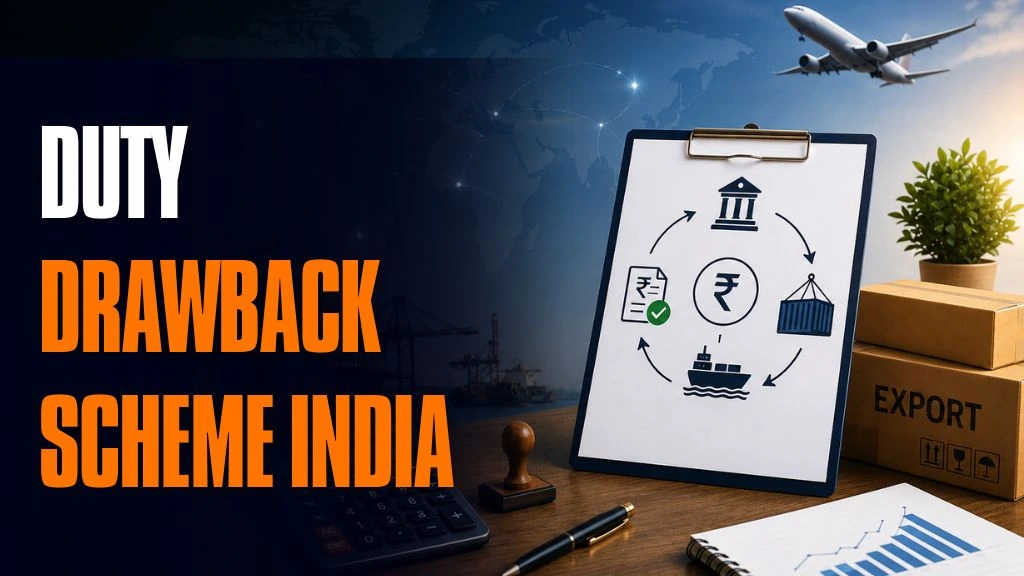
Exporting goods from India involves more than arranging transport and completing customs formalities. If you’re paying customs duties on imported inputs used to manufacture export products, missing out on available refunds can unnecessarily increase your export costs.
The duty drawback scheme in India helps eligible exporters recover certain customs duties paid on imported materials used in exported goods. Understanding how the scheme works, who can claim it, and what documentation is required can help you avoid costly mistakes and improve your export margins. When combined with proper export planning, customs compliance, and professional logistics support, duty drawback becomes an important part of an efficient export strategy.
Key Takeaways:
- Duty drawback helps exporters recover eligible customs duties on imported inputs used in export goods.
- Accurate documentation and correct HS classification are key to faster claim processing.
- Duty drawback and GST refunds are separate export benefits with different eligibility rules.
- Reviewing claims before filing helps reduce customs queries and processing delays.
- Strong documentation and compliance practices improve the chances of a successful drawback claim.
What Is the Duty Drawback Scheme in India?
The duty drawback scheme in India is a government incentive that allows exporters to claim a refund of eligible customs duties paid on imported goods or raw materials that are subsequently used in manufacturing products for export.
The objective is straightforward: exported goods should not carry the burden of import duties that would otherwise make Indian products less competitive in international markets.
Depending on the nature of the export and the applicable rules, exporters may receive drawbacks based on government-notified rates or, in eligible cases, based on actual duty incidence.
The scheme is administered through Indian Customs and forms part of India’s export promotion framework.
Why the Duty Drawback Scheme Matters
Every unnecessary cost affects export competitiveness. Customs duties paid on imported components, parts, or raw materials can increase production costs if they are not recovered through available government schemes.
Claiming duty drawback can help you:
- Reduce the overall cost of exported goods
- Improve pricing competitiveness in overseas markets
- Strengthen profit margins
- Support better cash flow
- Recover eligible customs duties in accordance with applicable regulations
However, obtaining these benefits depends on accurate documentation and compliance with customs procedures. Knowing how to calculate landed cost also helps exporters measure the financial impact of customs duties and potential drawback refunds.
How Does the Duty Drawback Scheme Work?
The process begins when imported materials or components are used to manufacture products that are ultimately exported from India.
After export formalities are completed and the shipment is processed through customs, eligible exporters can claim drawback under the applicable provisions, provided all documentation and compliance requirements have been met.
Although individual shipments may differ, the process generally includes:
- Import eligible inputs.
- Manufacture or process export goods.
- Complete export documentation.
- File shipping documents through customs.
- Submit the drawback claim where applicable.
- Receive the eligible refund after customs processing.
Accuracy at every stage is important because discrepancies in declarations or supporting documents can delay processing.
Understanding the customs clearance process helps exporters prepare accurate documentation and avoid delays before filing a duty drawback claim.
Who Can Claim Duty Drawback?
Eligibility depends on the nature of the goods, applicable customs rules, and whether the exporter satisfies the prescribed conditions.
Generally, exporters may qualify if:
- Goods are exported from India.
- Eligible customs duties have been paid on imported inputs.
- Export documentation is complete and accurate.
- Customs requirements are fulfilled.
- Applicable declarations are correctly filed.
Eligibility should always be confirmed against current customs regulations before submitting a claim.
Types of Duty Drawback
Depending on the circumstances, duty drawbacks may be available under different mechanisms.
1. All Industry Rates (AIR)
For many export products, the Government of India notifies standard drawback rates applicable across an industry. These rates simplify the claim process by avoiding individual duty calculations for each exporter.
2. Brand Rate
Where notified rates do not adequately reflect the actual customs duties incurred, eligible exporters may apply for a Brand Rate subject to applicable rules and supporting documentation.
The appropriate option depends on the exported product and the applicable customs provisions.
Documents Required for Duty Drawback Claims
Documentation plays a central role in determining whether a claim can be processed efficiently. Missing or inconsistent paperwork may lead to delays, additional verification, or rejection of the claim.
Common documents include:
- Shipping Bill
- Commercial Invoice
- Packing List
- Bill of Lading or Air Waybill
- Export General Manifest details
- Import documentation for eligible inputs
- Duty payment records
- Bank Realisation Certificate, where applicable
- Supporting declarations required by Customs
Preparing these documents accurately before shipment reduces the likelihood of avoidable compliance issues.
Exporters should also understand the differences between the Bill of Entry vs Bill of Lading to avoid documentation errors during international trade.
Common Reasons Duty Drawback Claims Are Delayed
Many exporters assume that submitting a claim guarantees timely processing. In reality, customs authorities may request clarification if documentation is incomplete or inconsistent.
Some of the most common issues include:
- Incorrect Product Classification: Incorrect HS classification may affect drawback eligibility or applicable rates.
- Incomplete Shipping Documents: Missing invoices, declarations, or transport documents often result in additional verification.
- Documentation Inconsistencies: Differences in product descriptions, quantities, or values across documents can delay customs processing.
- Failure to Meet Procedural Requirements: Claims submitted without satisfying prescribed customs procedures may require correction before processing.
Reviewing documentation before filing helps minimise these issues. Avoiding common customs clearance mistakes can significantly improve the chances of a smoother drawback claim process.
Duty Drawback and GST Refunds: Understanding the Difference
Exporters sometimes confuse the duty drawback scheme in India with GST refunds because both relate to exports.
However, they address different tax components.
The duty drawback scheme primarily concerns eligible customs duties associated with imported inputs used in exported goods.
A GST refund export shipments process relates to the refund of eligible GST paid under applicable export provisions.
Depending on the transaction and applicable regulations, an exporter may qualify for one or both mechanisms, subject to current legal provisions and compliance requirements.
Understanding the distinction helps avoid incorrect claims and supports better financial planning.
Our article on GST on Exports Explained provides a detailed overview of GST treatment for export transactions.
The Role of Customs Brokerage
Submitting a drawback claim involves more than uploading documents. Customs procedures require accurate declarations, correct tariff classifications, and compliance with applicable regulations.
Professional Customs Brokerage services can assist with:
- Reviewing export documentation
- Verifying tariff classifications
- Supporting drawback documentation
- Coordinating customs submissions
- Identifying compliance issues before filing
Early document reviews often reduce the likelihood of avoidable customs queries.
Well-prepared documentation also helps exporters respond efficiently if their shipment is selected for a customs examination at JNPT.
Why Customs Consultancy Adds Value
Export regulations evolve, making it important to review current compliance requirements before every shipment.
A knowledgeable customs consultancy partner can help you:
- Understand applicable customs provisions
- Review documentation requirements
- Interpret regulatory changes
- Improve compliance processes
- Reduce documentation errors
Seeking guidance before shipment is generally more efficient than correcting issues after customs raises queries.
How Freight Forwarding Supports Successful Duty Drawback Claims
Although freight forwarders do not determine drawback eligibility, effective freight forwarding supports smoother export operations by ensuring documentation moves alongside the shipment.
A coordinated freight forwarding process helps with:
- Timely document preparation
- Transport coordination
- Shipping line communication
- Export scheduling
- Documentation flow between stakeholders
When freight forwarding, customs brokerage, and export documentation work together, exporters are better positioned to complete customs formalities efficiently.
Best Practices Before Filing a Duty Drawback Claim
Before submitting any claim, consider the following checklist:
- Confirm eligibility under current customs regulations.
- Verify HS classification.
- Review all export documentation for consistency.
- Maintain organised duty payment records.
- Ensure declarations are complete.
- Coordinate with customs specialists before filing.
- Retain supporting documents for future verification.
Small documentation errors can create avoidable delays, so reviewing the complete file before submission is always worthwhile.
Understanding Incoterms and Export Responsibility
The agreed Incoterm influences responsibilities between buyers and sellers, including documentation, transport arrangements, and customs obligations.
Choosing the correct Incoterm helps ensure that each party understands its responsibilities before goods leave India.
Understanding Incoterms 2020 helps exporters assign responsibilities for transport, insurance, and customs more effectively.
Prepare Your Export Documentation with Confidence
Every export shipment depends on accurate paperwork, regulatory compliance, and coordinated customs processes.
Whether you’re seeking guidance on export documentation, customs brokerage, Customs Consultancy, or international Freight Forwarding, Clearfast Group can help you prepare documentation, coordinate customs requirements, and support smoother cross-border shipments.
Speak with our team to review your export documentation before your next shipment and reduce the risk of avoidable customs delays.
Final Thoughts
The duty drawback scheme in India remains an important export incentive for eligible businesses seeking to recover customs duties on imported inputs used in exported goods. Exporters importing capital goods should also understand the EPCG Scheme, as it offers customs duty benefits under different eligibility conditions. While the concept is straightforward, successful claims depend on accurate documentation, regulatory compliance, and careful coordination throughout the export process.
Reviewing export documents before shipment, understanding applicable customs requirements, and maintaining consistent records can significantly reduce delays during customs processing.
Whether you’re shipping engineering products, industrial equipment, manufactured goods, or project cargo, taking a structured approach to export documentation helps support efficient international trade.